
Milk Thistle vs Dandelion Root: Liver, Bloat & Weight (2026)

Affiliate disclosure: This article contains affiliate links. If you buy through them, we may earn a commission at no extra cost to you. We only cover products we've researched in depth. This is not medical advice.
Short answer: Milk thistle and dandelion root target different biological pathways. Milk thistle excels at liver enzyme reduction and cellular protection, while dandelion root stimulates bile flow and relieves post-meal digestive bloating. You can safely combine both herbs. For daily supplementation, single-herb retail capsules cost $15 to $35 with standard 30-day return policies, while combination morning drinks like Ikaria Lean Belly Juice deliver both botanicals in a ~3.2 g blend for $39 to $69 per jar backed by a 180-day money-back guarantee.
Milk thistle is a botanical extract standardized to 70%–80% silymarin flavonolignans that defend hepatocyte membranes. Dandelion root is a bitter taproot supplying prebiotic inulin and sesquiterpene lactones that trigger gallbladder bile secretion. Neither botanical directly dissolves visceral belly fat, but their combined actions relieve digestive heaviness and support metabolic health.
Quick Verdict: Milk Thistle vs Dandelion Root at a Glance
Milk thistle is best for elevated liver enzymes and cellular repair, backed by 140 to 420 mg standardized silymarin doses in meta-analyses (PMID: 38579127). Dandelion root is superior for digestive fullness and bile flow at 500 to 1,500 mg, while dandelion leaf provides acute mild diuresis for fluid bloating.
To evaluate both botanicals fairly for adults aged 45 to 75, we scored them across five core criteria:
Clinical liver trials: Human transaminase (ALT/AST) reduction versus animal-only data.
Digestive mechanics: Choleretic bile stimulation versus renal fluid excretion.
Weight management evidence: Temporary water-shedding versus metabolic insulin sensitivity.
Safety and drug interactions: Compatibility with statins, blood thinners, and diuretics.
Product transparency and pricing: Verified milligram labels versus proprietary ClickBank blends.
Our verdict: Milk thistle takes #1 for liver cells, while dandelion root takes #1 for bloating and bile flow. Pairing them provides dual support: defending hepatocytes internally while accelerating digestive clearance.
Milk Thistle vs Dandelion Root: Liver, Bloat & Weight Evidence

Milk thistle reduces ALT by 9.26 U/L across eight human trials (n=587, PMID: 29245314) via hepatocyte membrane protection, while dandelion root triggers choleretic bile flow for fatty meals. For water bloat, dandelion leaf extract provides a diuretic effect within five hours (n=17, PMID: 19678785), and multi-herb formulas confirm long-term clinical safety (PMID: 41659807).
Their active phytochemicals explain these divergent physiological responses:
1. Cellular Liver Protection: Silymarin Leads on Proof
Milk thistle seeds supply silymarin (silybin A and B, isosilybin, silychristin), protecting hepatocyte membranes and preserving intracellular glutathione. In a meta-analysis of 587 fatty liver patients (PMID: 29245314), silymarin produced a statistically significant reduction in ALT of -9.26 U/L and AST of -6.44 U/L versus controls. A 2024 review (PMID: 38579127) confirmed that 140 to 420 mg daily doses aid transaminase recovery. Dandelion root steatosis trials remain limited to animal models (PMID: 20162002). Verdict: Milk thistle leads on liver enzyme recovery.
2. Bloating and Digestion: Dandelion Root and Leaf Win Decisively
Abdominal distension stems from two distinct mechanisms: digestive fullness or fluid retention:
Digestive fullness: Sluggish bile delays gastric emptying, causing post-meal heaviness. Dandelion root contains bitter sesquiterpene lactones prompting the gallbladder to release bile into the small intestine. Milk thistle does not stimulate bile flow.
Fluid bloating: In a clinical trial (n=17, PMID: 19678785), dandelion leaf extract significantly increased fluid excretion within five hours. Dandelion leaf provides potassium to balance mineral loss, whereas milk thistle has zero diuretic effect. Dandelion root contains inulin; those with SIBO or severe IBS should prefer leaf tea.
3. Weight Management and Belly Fat: Separating Hype from Physiology
Online claims that dandelion tea melts belly fat confuse fluid loss with fat reduction:
Dandelion tea: Sheds 1 to 3 pounds of temporary water weight over 48 hours via diuresis. This eases puffiness, but removes zero visceral fat. Once fluids and electrolytes replenish, that weight returns.
Milk thistle: Does not burn fat directly, but addresses hepatic insulin resistance. A meta-analysis (PMID: 33019400) showed silymarin lowered fasting glucose and improved HOMA-IR scores, aiding fat loss alongside a calorie deficit.
4. Combining Both Botanicals: Synergy and Clinical Proof
Combining milk thistle and dandelion root is safe and clinically rational. Milk thistle defends hepatocyte membranes, while dandelion root stimulates bile flow. In a 2026 trial in Frontiers in Nutrition (PMID: 41659807), healthy adults taking a formula containing milk thistle, dandelion, ginger, and turmeric across 180 days (6 months) showed significant liver enzyme improvements (ALT, AST, GGT) with zero adverse events.
For related research, see our comparison of berberine vs milk thistle for weight loss and our guide on how to improve liver function naturally through daily habits.
2026 Comparison Table: 5 Formulas Containing Milk Thistle or Dandelion
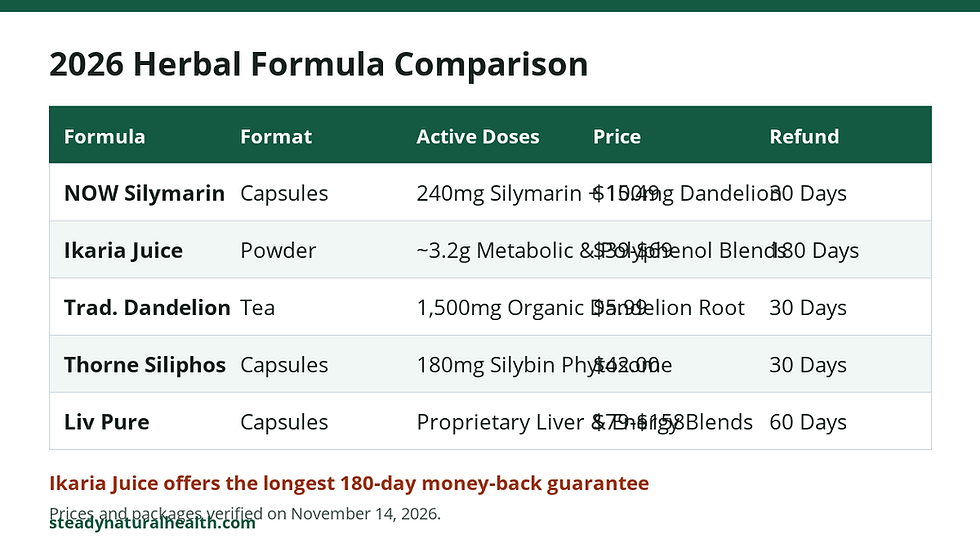
Ranked strictly by verified milligram transparency, NOW Silymarin 300 mg takes #1 for budget liver support ($15 per bottle, DSLD #245882). Ikaria Lean Belly Juice takes #2 overall ($39 to $69 per jar) as our top multi-botanical morning drink, providing both herbs in a ~3.2 g blend with a 180-day refund window.
Rank & Formula | Format | Key Actives Disclosed | 2026 Price | Refund | Best For |
#1 NOW Silymarin | Capsules | 300 mg Milk Thistle (80%), 100 mg Dandelion Root | ~$15.49 (100 ct) | 30 Days | Budget buyers wanting verified clinical doses |
#2 Ikaria Belly Juice | Powder | ~3.2 g blends: Dandelion, Silymarin, EGCG, Resveratrol | $69 to $39/jar | 180 Days | Morning berry drink with multi-pathway antioxidants |
#3 Trad. Dandelion | Tea Bags | 1,500 mg Organic Roasted Dandelion Root | ~$5.99 (16 bags) | 30 Days | Evening digestive heaviness and gentle bloat relief |
#4 Thorne Siliphos | Capsules | 180 mg Silybin-Phosphatidylcholine Complex | ~$42.00 (90 ct) | 30 Days | Maximum silybin absorption for liver enzymes |
#5 Liv Pure | Capsules | Proprietary blends: Silymarin, Berberine, Green Tea | $158 (2 btls) | 60 Days | Capsule users wanting multi-herbal blends |
Detailed Reviews: How Each Formula Stacks Up on Doses and Evidence
NOW Silymarin discloses 240 mg silymarin plus 100 mg dandelion root for $15, matching clinical trials. Ikaria Lean Belly Juice supplies ~3.2 g of proprietary metabolic and polyphenol blends for $39 to $69 per jar with 180-day protection, while traditional tea bags provide 1,500 mg organic dandelion root for $0.37 per serving.
Here is how each product performs in daily use:
1. NOW Silymarin 300 mg — Best Overall for Disclosed Dosing & Value (#1 Pick)
NOW Silymarin earns #1 for label transparency. Verified on NIH DSLD #245882, each capsule delivers 300 mg Milk Thistle Extract (240 mg silymarin), 100 mg Dandelion Root, and 50 mg Artichoke Leaf for ~$15.49 per 100 capsules ($0.15/day)—the cleanest budget option for verified clinical doses.
2. Ikaria Lean Belly Juice — Best Comprehensive Morning Drink (#2 Pick)
Ikaria Lean Belly Juice ranks #2 as our top morning drink. One ~3.2 g scoop delivers a metabolic blend (silymarin, dandelion root, fucoxanthin, EGCG, ginseng, resveratrol) and a polyphenol blend with 3 billion CFU probiotics. The trade-off is proprietary blends concealing individual milligrams.
Pricing & Guarantee (Verified November 14, 2026): 1 jar ($69 + $9.95 shipping), 3 jars ($177, $59/jar, free shipping), or 6 jars ($234, $39/jar, free shipping). Covered by a 180-day money-back guarantee—return all jars (including empties) to Tallmadge, Ohio for a refund. See our Ikaria Lean Belly Juice review and Ikaria pricing guide.
3. Traditional Medicinals Roasted Dandelion Root Tea — Best Brewed Tea (#3 Pick)
Verified on NIH DSLD #246473, each tea bag supplies 1,500 mg of organic pharmacopeial dandelion root. Roasting yields a rich flavor prompting bitter digestive reflexes 20 minutes after dinner. At ~$5.99 for 16 bags ($0.37/cup), it offers an affordable ritual, though omitting milk thistle.
4. Thorne Siliphos — Best High-Absorption Silybin Capsule (#4 Pick)
Standard silymarin has poor intestinal absorption. Thorne resolves this with Siliphos (NIH DSLD #337116), binding 180 mg of silybin to sunflower phospholipids. Phytosome delivery yields higher plasma concentrations than generic extracts. At ~$42 per bottle, it is an evidence-grade choice for liver enzymes, though omits dandelion.
5. Liv Pure — Alternative Capsule Option (#5 Pick)
Liv Pure packs ten ingredients into two capsules across two proprietary blends (silymarin, berberine, green tea, resveratrol, glutathione). Its steep $158 two-bottle entry price and short 60-day refund window place it behind Ikaria. See our Liv Pure review for formula analysis.
Real Consumer Feedback: Trustpilot, BBB & Reddit Patterns
Consumer feedback across Reddit, BBB, and Trustpilot highlights three patterns:
Expectations: Unhappy buyers expected rapid fat loss without diet changes; satisfied users treated herbs as digestive aids.
Refund rules: Disputes occur when missing bottles are returned; makers require sending back all containers (including empties) with packing slips.
Digestive adjustment: Mild stomach rumbling or loose stools during days 1 to 5 occurs as gut flora adapts.
How to Choose the Right Format (and Habits That Work Free)
Choose single-herb standardized capsules like NOW Silymarin ($15, 300 mg) or Thorne Siliphos ($42) if your primary goal is liver enzyme management on routine blood work. Select loose or bagged dandelion root tea ($0.35 per serving) for post-dinner digestive heaviness, or multi-nutrient morning powders ($39 to $69 per jar) for broader antioxidant routines.
Align your choice with your personal habits:
Elevated ALT/AST on lab tests: Choose standardized capsules (NOW Silymarin or Thorne Siliphos) for verified silymarin doses taken with meal fats.
Post-meal heaviness and gas: Sip roasted dandelion tea 20 minutes after dinner to stimulate bile.
Morning drink routine: Choose Ikaria Lean Belly Juice to combine dandelion, silymarin, and polyphenols in one glass.
Free habits: Eat 5 g soluble fiber, drink 64 oz water, and walk 20 minutes daily.
[!IMPORTANT] When to see a doctor: Abdominal swelling lasting over 14 days, sudden fluid buildup in the lower belly (ascites), jaundice (yellowing skin/eyes), or persistent pain under the right ribcage requires immediate physician evaluation. Over-the-counter supplements cannot treat hepatitis, gallstones, or cirrhosis.
Side Effects, Medication Interactions, and Who Should Skip Them
Standard doses between 140 and 420 mg silymarin or up to 2,000 mg dandelion root are generally well-tolerated, but both herbs interact with medications. Dandelion increases fluid excretion, risking potassium imbalances with potassium-sparing diuretics, while silymarin can alter cytochrome P450 enzyme metabolism, requiring caution for patients taking statins, warfarin, or prescription diabetes medications.
Screen for these medical cautions before starting:
Diuretics: Dandelion increases fluid excretion; combining it with furosemide raises dehydration risk, while spironolactone risks hyperkalemia.
Diabetes Medications: Both herbs enhance insulin sensitivity; monitor glucose closely with metformin or insulin.
Blood Thinners: Both herbs may mildly inhibit platelet aggregation; consult a physician if taking warfarin.
CYP450 Metabolism: Silymarin inhibits CYP3A4/CYP2C9 liver enzymes, potentially altering statin clearance.
Active Gallstones: Dandelion stimulates gallbladder contractions, risking biliary colic if ducts are blocked.
Asteraceae Allergies: Both herbs belong to the daisy family; avoid if allergic to ragweed or marigolds.
Pregnancy & Nursing: High-potency extracts lack safety trials in pregnant or nursing women.
Frequently Asked Questions
Common questions regarding milk thistle and dandelion root address daily timing, tea vs capsule absorption, and specific bloat mechanisms. Clinical trials report optimal silymarin absorption with meal fats at 140 to 420 mg daily (PMID: 38579127), whereas dandelion is traditionally taken 15 to 30 minutes before heavy meals or earlier in the afternoon.
Can you take milk thistle and dandelion root together?
Yes. Milk thistle protects liver cells while dandelion root stimulates bile flow. A 2026 clinical trial (PMID: 41659807) confirmed multi-herbal formulas with both botanicals support liver function safely across 180 days.
Which is better for liver fat and bloating: milk thistle or dandelion root?
Milk thistle is superior for liver fat by lowering ALT/AST enzymes in clinical trials. Dandelion root is superior for bloating by prompting gallbladder bile release to digest heavy meals.
Do milk thistle and dandelion root help with weight management?
Neither botanical burns belly fat directly. Dandelion tea sheds 1 to 3 pounds of temporary water weight. Milk thistle supports metabolic health and insulin sensitivity alongside a caloric deficit.
Does dandelion tea burn belly fat or just water weight?
Dandelion tea sheds temporary water weight, not visceral fat. Its potassium and bitter glycosides prompt kidney filtration to ease puffiness. Sustained fat loss requires caloric deficit.
Is dandelion root or dandelion leaf better for bloating?
Dandelion root is best for digestive gas and post-meal heaviness by stimulating bile flow. Dandelion leaf is best for fluid retention and puffiness due to stronger diuretic action.
When is the best time of day to take milk thistle or drink dandelion tea?
Take milk thistle with breakfast or lunch alongside healthy fats for absorption. Sip dandelion root tea 20 minutes after heavy meals, and drink dandelion leaf tea earlier in the afternoon.
How long does it take to see results from these herbs?
Dandelion root relieves digestive heaviness within 30 to 60 minutes; dandelion leaf eases fluid bloat within five hours. Milk thistle requires 8 to 12 weeks for measurable liver enzyme improvements.
If you are looking for an all-in-one morning powder combining both botanicals alongside superfruit polyphenols, view the product details and 180-day refund policy.
Sources
Li S, et al. Silymarin in NAFLD/NASH: systematic review and meta-analysis. Ann Hepatol. 2024. https://pubmed.ncbi.nlm.nih.gov/38579127/
Zhong S, et al. Silymarin in nonalcoholic fatty liver disease: meta-analysis. Medicine (Baltimore). 2017. https://pubmed.ncbi.nlm.nih.gov/29245314/
Clare BA, et al. Diuretic effect of Taraxacum officinale folium in humans. J Altern Complement Med. 2009. https://pubmed.ncbi.nlm.nih.gov/19678785/
Patel G, et al. Long-term safety and efficacy of a plant-based nutraceutical for liver function: randomized clinical trial. Front Nutr. 2026. https://pubmed.ncbi.nlm.nih.gov/41659807/
Xiao F, et al. Silymarin for glucose/lipid metabolic dysfunction: meta-analysis. Front Pharmacol. 2020. https://pubmed.ncbi.nlm.nih.gov/33019400/
Choi UK, et al. Dandelion root and leaf on cholesterol-fed rabbits. Int J Mol Sci. 2010. https://pubmed.ncbi.nlm.nih.gov/20162002/
NIH DSLD: NOW Silymarin 300 mg. Label #245882. https://dsld.od.nih.gov/label/245882
NIH DSLD: Traditional Medicinals Dandelion Root. Label #246473. https://dsld.od.nih.gov/label/246473
NIH DSLD: Thorne Siliphos. Label #337116. https://dsld.od.nih.gov/label/337116
U.S. FDA: Dietary Supplements. https://www.fda.gov/food/dietary-supplements
FTC: Endorsement Guides. https://www.ftc.gov/business-guidance/resources/ftcs-endorsement-guides-what-people-are-asking
Medical disclaimer: This article is for informational purposes only and is not medical advice. Dietary supplements are not evaluated by the FDA to diagnose, treat, or prevent any disease. Product details, packages, and refund terms were verified on November 14, 2026 and may change.


