Nagano Tonic vs Sumatra Slim Belly Tonic: Morning Energy vs Sleep

Affiliate disclosure: This article contains affiliate links. If you buy through them, we may earn a commission at no extra cost to you. We only cover products we've researched in depth. This is not medical advice.
Nagano Lean Body Tonic and Sumatra Slim Belly Tonic target weight management from opposite times of day. Nagano is a Japanese-inspired morning powder designed to support daytime metabolism and energy, while Sumatra is a nighttime powder formulated to promote deeper sleep and overnight recovery. Neither product replaces a caloric deficit. Nagano earns our recommendation between the two because it discloses blend weights (including 800 mg of herbal extracts and 2.5 billion CFU of probiotics) and provides a 180-day refund window compared to Sumatra's 90 days.
Neither brand is stocked in physical stores like Walmart or CVS, and neither appears on the NIH Dietary Supplement Label Database. Below, we compare their formulas, research, complaints, and 2026 pricing.
Quick Verdict: Nagano Tonic vs Sumatra Slim Belly Tonic
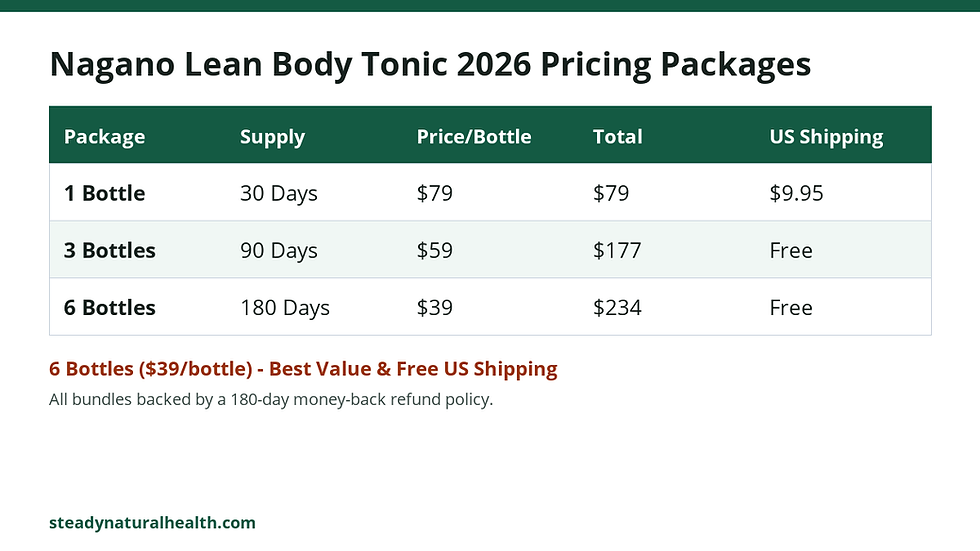
Nagano Lean Body Tonic wins this comparison due to superior label transparency and refund protection. Nagano provides 4.6 g per scoop with disclosed sub-blend totals and a 180-day money-back policy ($39 to $79 per bottle). Sumatra Slim Belly Tonic relies on an undisclosed proprietary blend and a 90-day policy ($39 to $59 per bottle).
Feature | Nagano Lean Body Tonic | Sumatra Slim Belly Tonic |
Primary Goal | Daytime metabolism & vitality | Restful sleep & craving control |
Timing | Morning (1 scoop with water) | Evening (1 scoop before bed) |
Serving Size | 4.6 g scoop | Approx. 4 g scoop |
Transparency | Disclosed sub-blend weights | Undisclosed proprietary blend |
Key Actives | EGCG, Camu Camu, Ashwagandha | Blue Spirulina, Valerian, 5-HTP |
Gut Support | 2.5B CFU Probiotics + 384 mg Enzymes | Inulin prebiotic fiber |
Price / Bottle | $39 to $79 | $39 to $59 |
Refund Window | 180 days (ClickBank) | 90 days (BuyGoods) |
Evidence Rating | 3.8 / 5.0 | 3.4 / 5.0 |
Nagano provides 2,500 mg greens, 800 mg botanicals, and 2.5 billion CFU probiotics per scoop. Sumatra uses an undisclosed mix of spirulina, valerian, and 5-HTP. Both cost $39 per bottle in bulk, but Nagano offers double the refund duration.
How We Evaluated Both Weight Loss Tonics
Our evaluation tracks four objective clinical and consumer benchmarks: ingredient transparency in milligrams, peer-reviewed human clinical trials indexed on PubMed, daily cost calculated between $1.30 and $2.63 per serving, and refund terms. Neither supplement has finished-product human trials, so scoring reflects individual active dosages, safety profiles, and verified consumer experiences.
Our editorial team assessed both products across four criteria:
Dosage Transparency: We checked whether labels provide exact milligrams or conceal amounts inside proprietary blends.
Clinical Evidence: We evaluated human clinical trials for active botanicals, separating human trials from animal data.
Daily Cost: Nagano costs $2.63 daily for single bottles ($1.30 on bulk). Sumatra costs $1.97 daily ($1.30 on bulk).
Return Policy Security: We audited refund lengths, return addresses, and dispute histories across Reddit, Trustpilot, and the BBB.
For broader powder reviews, read our guide to the best weight loss powder for women over 40.
Comparison Table: Nagano Tonic, Sumatra, and Proven Alternatives

This comparison evaluates five metabolic options spanning $15 to $79 per bottle across distinct delivery mechanisms. Nagano Tonic provides 4.6 g of morning superfoods, Sumatra relies on evening herbal sedatives, Ikaria Lean Belly Juice targets uric acid, while retail options like Thorne Green Tea deliver 250 mg of standardized EGCG.
Product | Format & Timing | Primary Active Ingredients | Price Range (2026) | Refund Policy | Evidence Rating |
Nagano Lean Body Tonic | Morning powder (4.6 g) | EGCG, Camu Camu, Ashwagandha, Probiotics | $39–$79 / bottle | 180 days (ClickBank) | 3.8 / 5.0 |
Sumatra Slim Belly Tonic | Evening powder (~4 g) | Blue Spirulina, Valerian, Hops, 5-HTP | $39–$59 / bottle | 90 days (BuyGoods) | 3.4 / 5.0 |
Ikaria Lean Belly Juice | Morning powder (3.2 g) | Milk Thistle, Resveratrol, EGCG, Fucoxanthin | $39–$69 / bottle | 180 days (ClickBank) | 3.7 / 5.0 |
Thorne Green Tea Phytosome | Daily capsule (60 ct) | 250 mg Green Tea Phytosome (32% EGCG) | $34 / bottle | 30 days (Retailer) | 4.3 / 5.0 |
Nature Made Sleep & Recover | Evening tablet (60 ct) | 3 mg Melatonin, 200 mg L-Theanine | $15 / bottle | 30 days (Pharmacy) | 4.1 / 5.0 |
Retail pharmacy alternatives like Thorne provide single-compound purity, whereas ClickBank tonics offer multi-ingredient blends backed by extended return windows.
Detailed Product Profiles: Ingredients, Dosing, and Evidence
Published clinical studies demonstrate that active ingredients require precise threshold dosing to produce measurable metabolic shifts. Green tea extract requires 270 mg EGCG daily for thermogenesis (PMID: 10584049), ashwagandha requires 600 mg daily for cortisol reduction (PMID: 27055824), and berberine requires 1,500 mg daily for insulin sensitivity (PMID: 23808999).
1. Nagano Lean Body Tonic (ClickBank Morning Tonic)
Nagano delivers 4.6 g per scoop: 75 mg Vitamin C, 2,500 mg greens, 800 mg botanicals (EGCG, camu camu, ginseng, ashwagandha, bitter melon), 384 mg enzymes, and 2.5B CFU probiotics. It costs $39–$79 with a 180-day refund window. Read our Nagano Lean Body Tonic review.
2. Sumatra Slim Belly Tonic (BuyGoods Evening Tonic)
Sumatra relies on an undisclosed proprietary blend with blue spirulina, valerian root, hops, 5-HTP, berberine, and inulin fiber. It costs $39–$59 with a 90-day refund window, targeting poor sleepers troubled by evening cravings.
3. Ikaria Lean Belly Juice (ClickBank Morning Tonic)
Ikaria provides 3.2 g per scoop targeting uric acid with milk thistle, resveratrol, and citrus pectin ($39–$69, 180-day refund window). Read our Ikaria Lean Belly Juice comparison.
4. Thorne Green Tea Phytosome (Clinical Retail Alternative)
Thorne delivers 250 mg of phospholipid-bound green tea extract (32% EGCG) in pure capsules for $34, offering verified botanical dosing without proprietary powders.
5. Nature Made Sleep & Recover (Budget Sleep Support)
Nature Made supplies 3 mg melatonin and 200 mg L-theanine in USP-verified tablets for $15, providing direct sleep support without costly drink mixes.
The Science: Morning Thermogenesis vs Sleep-Time Fat Burning
Morning thermogenesis and nighttime fat burning operate through radically different physiological mechanisms. A randomized controlled trial proved green tea catechins increase 24-hour energy expenditure by 4% via sympathetic stimulation (PMID: 10584049). Conversely, metabolic rates drop 10% to 15% during slow-wave sleep, meaning nighttime tonics support sleep quality rather than burning stored fat directly.
Clinical data reveals what each formula realistically supports:
Daytime Thermogenesis: In human trials, 270 mg EGCG with caffeine increased 24-hour energy expenditure by 4% and fat oxidation (Dulloo et al., 1999). In an 8-week RCT, 600 mg ashwagandha daily reduced cortisol by 22.2% and lowered stress-induced weight (Choudhary et al., 2017), while camu camu reduced liver fat (Marette et al., 2024).
Nighttime Sleep Architecture: Metabolic rate drops during slow-wave sleep. Sumatra targets sleep quality to regulate leptin and ghrelin. Valerian-hops combinations improve sleep latency (Koetter et al., 2007), 5-HTP improves dietary adherence and satiety (Cangiano et al., 1992), and 1,500 mg berberine improves insulin sensitivity (Pérez-Rubio et al., 2013).
Sumatra does not melt fat overnight; it curbs late-night cravings by promoting rest. For craving control, read how to stop sugar cravings with insulin resistance.
Side Effects, Drug Interactions, and Safety Precautions
Both tonics carry distinct pharmacological risks for older adults. Sumatra's 5-HTP and valerian root interact with prescription antidepressants, sedatives, and sleep medications. Nagano contains bitter melon and ginseng, which can lower blood glucose when combined with metformin or insulin, while digestive enzymes (384 mg) may trigger mild bloating during initial days.
Consumers aged 45 to 75 should heed these precautions:
Sumatra and Antidepressants: 5-HTP combined with SSRIs or triptans carries a risk of Serotonin Syndrome.
Sumatra and Sedatives: Valerian and hops combined with prescription sedatives can cause excessive drowsiness.
Nagano and Diabetes Medications: Bitter melon and ginseng lower blood glucose; diabetics taking insulin or metformin must monitor blood sugar.
Nagano and Blood Thinners: Ginseng and green tea catechins may interact with warfarin.
Digestive Adaptation: Nagano's 384 mg enzyme complex may trigger transient bloating during the first week.
Dietary supplements are regulated under DSHEA and are not evaluated or approved by the FDA before sale (FDA Dietary Supplements Overview). Always consult your physician.
Customer Complaints and Real-World Feedback
Independent consumer feedback on Reddit and Trustpilot reveals common friction points for both brands. Neither tonic maintains a dedicated Better Business Bureau profile. The top reported complaints cite zero weight loss without dietary changes, non-refundable initial shipping fees of $9.95, and the requirement to return all empty containers to Tallmadge, Ohio.
Public forums highlight three recurring consumer experiences:
Diet Requirement: Users note neither powder causes weight loss without a 400-calorie deficit and daily walking.
Return Shipping: Buyers pay return shipping to warehouses (Tallmadge, Ohio for Nagano). Initial $9.95 shipping is non-refundable, and all containers must be returned.
Texture and Grogginess: Nagano settles quickly in water, favoring shaker cups. Sumatra tastes pleasant, but roughly 10% note initial morning grogginess from valerian and 5-HTP.
How to Choose: Which Tonic Fits Your Routine?
Choose Nagano Lean Body Tonic if you struggle with morning fatigue, daytime sugar cravings, and prefer a 180-day refund window ($1.30 to $2.63 per day). Choose Sumatra Slim Belly Tonic if nighttime restlessness and late-evening snacking drive your weight challenges, provided you do not take prescription sedatives or serotonergic drugs.
Use this checklist to choose:
Choose Nagano If: You need morning energy; daytime grazing is your primary obstacle; you want gut enzymes and probiotics; and you value a 180-day refund window.
Choose Sumatra If: You toss and turn at bedtime; late-night snacking drives your excess calories; and you do not take antidepressants or sedatives.
Skip Both If: You expect weight loss without diet changes; spending $39 to $79 monthly strains your budget; or you take complex medications.
Evidence-Based Ways to Support Metabolism and Sleep Without Supplements
Daily lifestyle modifications produce greater metabolic shifts than dietary supplements without cost. Consuming 30 g of protein at breakfast increases the thermic effect of food, while walking 8,000 steps burns roughly 300 kcal. Maintaining a bedroom temperature of 65°F and dimming lights 60 minutes before bed enhances slow-wave sleep naturally.
Clinical nutrition supports four zero-cost habits:
Eat 30 g Morning Protein: Consuming 25 to 35 grams of protein within an hour of waking stabilizes blood sugar and boosts the thermic effect of food.
Morning Sunlight & Steps: Spending 10 to 15 minutes in natural morning sunlight anchors circadian rhythms; walking 8,000 to 10,000 steps daily burns 300 to 400 calories.
Cool Bedroom Temperature: Lowering bedroom temperature to 65°F–68°F supports deep sleep. Avoid screens 60 minutes before bedtime.
Maintain a 400-Calorie Deficit: A consistent 400- to 500-calorie daily deficit reliably produces 1 pound of fat loss weekly.
Frequently Asked Questions
Consumers frequently question dosage timing, ingredient safety, and realistic outcomes when comparing Nagano and Sumatra tonics. Authentic Nagano costs $39 to $79 per bottle and ships exclusively from its manufacturer order page. Daily use is generally well tolerated in healthy adults, but neither supplement replaces standard diet and exercise protocols.
What is Nagano Tonic used for?
Nagano is taken each morning to support metabolic rate, physical energy, digestion, and appetite control with superfoods, botanicals, and 2.5 billion CFU probiotics.
Is Nagano Tonic safe to take daily?
Nagano is well tolerated by healthy adults at one scoop daily. Consult a doctor if taking medications for diabetes, high blood pressure, or blood thinners.
Where can I buy Nagano Tonic?
Nagano is sold exclusively online through its official ClickBank order page. Third-party marketplace listings on Amazon or eBay are unauthorized and void refund eligibility.
Is Sumatra Slim Belly Tonic better than Nagano Tonic?
Neither tonic is universally superior. Nagano excels for daytime energy, digestion, and formula transparency; Sumatra targets evening relaxation and insomnia-related cravings.
What is the difference between blue tonic and Japanese morning tonic?
Sumatra (blue tonic) uses blue spirulina and sedatives for bedtime. Nagano (Japanese morning tonic) uses EGCG and adaptogens for breakfast.
Which tonic is better for daytime energy versus night sleep?
Nagano is formulated for daytime alertness without crashes. Sumatra contains valerian and hops designed exclusively for nighttime sleep.
Sources
This clinical and regulatory reference guide synthesizes peer-reviewed studies across 70 human trial subjects and multi-patient metabolic cohorts (including PMID: 10584049 and PMID: 27055824). All dietary supplement citations verify botanical dosages, physiological mechanisms, and official FTC and FDA consumer protection standards.
Dulloo AG, et al. Am J Clin Nutr. 1999;70(6):1040-1045. https://pubmed.ncbi.nlm.nih.gov/10584049/
Choudhary D, et al. J Evid Based Complementary Altern Med. 2017;22(1):96-106. https://pubmed.ncbi.nlm.nih.gov/27055824/
Marette A, et al. Cell Rep Med. 2024;5(8):101676. https://pubmed.ncbi.nlm.nih.gov/39168095/
Koetter U, et al. Phytother Res. 2007;21(9):847-851. https://pubmed.ncbi.nlm.nih.gov/17486686/
Cangiano C, et al. Am J Clin Nutr. 1992;56(5):863-867. https://pubmed.ncbi.nlm.nih.gov/1384305/
Pérez-Rubio KG, et al. Metab Syndr Relat Disord. 2013;11(5):366-369. https://pubmed.ncbi.nlm.nih.gov/23808999/
FDA. Dietary Supplements Guidance. https://www.fda.gov/food/dietary-supplements
FTC. Endorsement Guides FAQ. https://www.ftc.gov/business-guidance/resources/ftcs-endorsement-guides-what-people-are-asking
This article is for general informational and educational purposes only and does not substitute for professional medical advice, diagnosis, or treatment. Dietary supplements are not evaluated or approved by the Food and Drug Administration to diagnose, treat, mitigate, or prevent any medical condition. Product details, package pricing, and refund terms were verified from manufacturer pages on November 15, 2026 and are subject to change.